



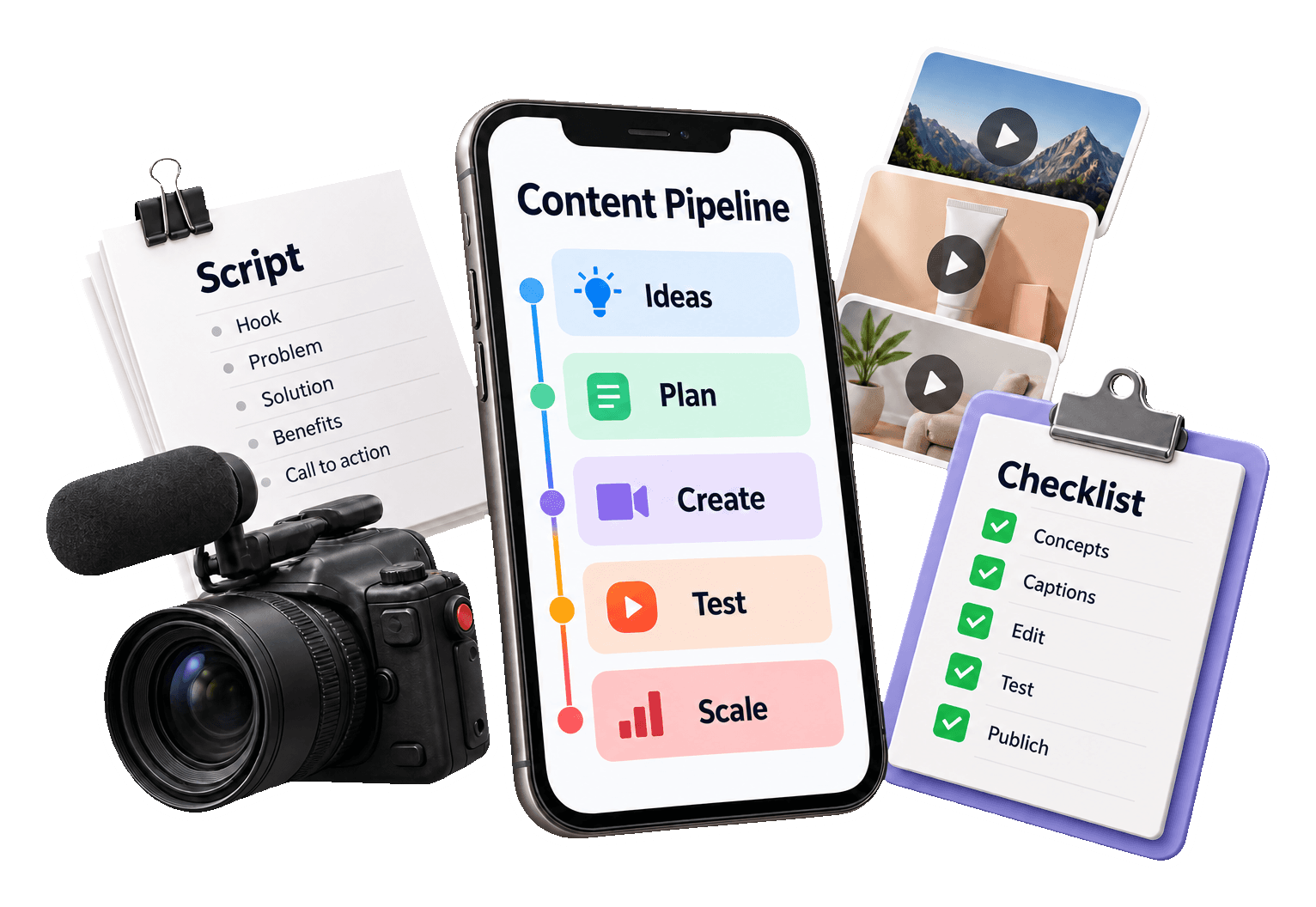
In the world of automated advertising, creative content is the driving force behind performance. While targeting and optimization are largely automated, the creativity of your ads determines their success. It's crucial to have a system in place that ensures your creative content is always up-to-date.
A content pipeline helps you to be proactive rather than reactive. Instead of waiting for your ads to become outdated, a structured approach ensures a continuous flow of new and effective content. This article shows you how to set up and maintain such a pipeline.
TL;DR
- A structured content pipeline prevents your ads from becoming outdated and ensures continuous creative output.
- Teams that maintain a steady cadence learn faster and improve their creative output through iteration.
- Good planning prevents reactive measures and ensures proactive renewal of your creative assets.
What is a Content Pipeline?
A content pipeline is more than just a calendar; it's an operational system that ensures creative ideas move from concept to launch without stagnation. It includes clear phases, owners, and a steady cadence that guarantees the flow of creative content.
It's not about more videos, but about better videos that are continuously refreshed. By following a fixed structure, you avoid having to react ad hoc to declining performance.
Steady Cadence
A steady cadence ensures that your creative content keeps refreshing, even when performance seems good. This prevents you from falling behind and ensures a constant stream of new ideas.
The importance of a content pipeline cannot be underestimated. By adopting a structured approach, you can ensure that your creative assets are always fresh and relevant. This is essential in a time when consumers quickly become bored and are constantly seeking new stimuli.
A well-designed content pipeline not only benefits content creation but also enhances team collaboration. By assigning clear roles and responsibilities, team members can work more efficiently, reducing the chance of miscommunication.
The Structure of a Content Pipeline
An effective content pipeline consists of several phases: Inputs, Briefing, Production, Review, Approval, Launch, Measure, and Learn. Each of these phases has a clear purpose and owner, which promotes the progress of creative projects.
It starts with defining the right inputs, such as persona marketing and performance data. This helps in generating ideas that are relevant and effective.
Owners and Handover
Each phase in the pipeline must have a clear owner. Without clear responsibilities, the process stagnates, especially during the review and approval phases.
The importance of clear ownership cannot be overstated. When everyone knows who is responsible for each phase, the team can work smoothly and efficiently. This prevents projects from stalling and ensures deadlines are met.
Additionally, it's essential to have a clear handover between phases. This means having clear criteria for when a project can move from one phase to the next. This helps prevent confusion and ensures everyone is on the same page.
Planning for Continuous Renewal
Good planning ensures you always have fresh creative assets ready before your current ads become outdated. This prevents you from having to react when performance declines.
By maintaining a steady cadence, such as weekly or bi-weekly updates, you can increase the speed of learning and ensure constant improvement of your creative output.
Visible Planning
A centralized planning overview helps to see what's live, what's coming up, and who is responsible for each part. This prevents delays and ensures a smooth launch of new content.
Planning your content pipeline is a strategic step that helps you stay ahead. By thinking ahead and anticipating market changes, you can ensure your content is always relevant and effective.
A well-planned content pipeline also allows you to quickly capitalize on unexpected opportunities. Whether it's a new trend or a sudden change in consumer behavior, with flexible planning, you can quickly respond and take advantage.
Batching for Efficiency
Batching is a strategy where you produce multiple variations of creative content at once. This increases output without additional production time and ensures a constant flow of new ideas.
Instead of striving for the perfect video, focus on creating multiple variations of the same base footage. This allows you to quickly learn what works and what doesn't.
Purposeful Versions
Creating variations should be done purposefully. By testing different hooks, CTAs, and value propositions, you discover what performs best.
Batching also offers the advantage of scalability. By producing multiple versions of a creative idea, you can quickly scale up and expand your reach without compromising quality.
Moreover, batching helps you spread risks. By testing different variations, you can quickly identify which approaches are most effective and focus your resources accordingly.
Setting Up a Reliable Creator System
A reliable creator system is essential for a constant stream of quality content. Instead of constantly searching for new creators, work with a fixed group of reliable partners.
These partners understand your brand and audience, allowing them to work faster and more effectively. This reduces the time needed for onboarding and increases the quality of the output.
Optimize for Iteration
The best ads are rarely perfect on the first try. They improve through feedback and performance data. A strong creator system ensures quick feedback loops and continuous improvement.
A strong creator system also offers the possibility for long-term collaboration. By working with the same partners, you build a trust relationship that leads to better communication and ultimately better results.
Additionally, a reliable creator system can help you drive innovation. By collaborating with partners who know your brand well, you can experiment with new ideas and approaches that might not be possible otherwise.
Tooling for Efficient Creative Processes
A solid tooling system is crucial to keep creative processes running smoothly. It standardizes workflows, assigns clear approvers, and ensures work automatically progresses once decisions are made.
Without clear workflows, creative content stagnates during reviews and approvals. A good tooling system removes this friction and keeps the creative flow going.
Centralization of Assets
By centralizing creative assets, versions remain clean, feedback is linked to specific moments, and reviews stay focused. This leads to fewer revisions and faster approvals.
Tooling can also help manage deadlines and track progress. By using project management tools, you can ensure everyone stays on schedule and projects are completed on time.
Moreover, good tooling can help analyze performance. By using analytics tools, you can gain insights into what works and what doesn't, and adjust your strategies accordingly.
A Feedback Loop for Continuous Improvement
A content pipeline only improves if lessons are learned. Without a structured feedback loop, each new creative batch is a gamble, which can become costly.
Performance data is not just for reporting but forms the basis for the next creative batch. The goal is to understand what works and deliver more of it.
Recognizing Patterns
Strong teams look for patterns in formats, hooks, and angles. These patterns are documented and reused, allowing the pipeline to stop repeating and start improving.
An effective feedback loop also helps foster a culture of continuous improvement within your team. By regularly collecting and analyzing feedback, you can ensure your team is always looking for ways to improve.
Additionally, a strong feedback loop helps you quickly respond to market changes. By continuously learning from your performance, you can quickly adapt and optimize your strategies for better results.
Available Immediately
Start setting up your content pipeline today and discover the power of structured creativity. Discover for yourself
Frequently asked questions
At UGC.NL, you can set up a structured content pipeline by using our creator marketplace and AI Search to find the right creators for your campaigns.
You pay from €59 per video at UGC.NL, with no subscription fees. This makes it affordable to generate a continuous stream of creative content.
The delivery time at UGC.NL is 3–5 days, allowing you to quickly respond to changing needs in your content pipeline.
Use the direct chat feature on UGC.NL to communicate quickly and effectively with creators and involve them in your content pipeline.
UGC.NL offers a money-back guarantee, ensuring you are satisfied with the creative content delivered.